NUTRITION LOG
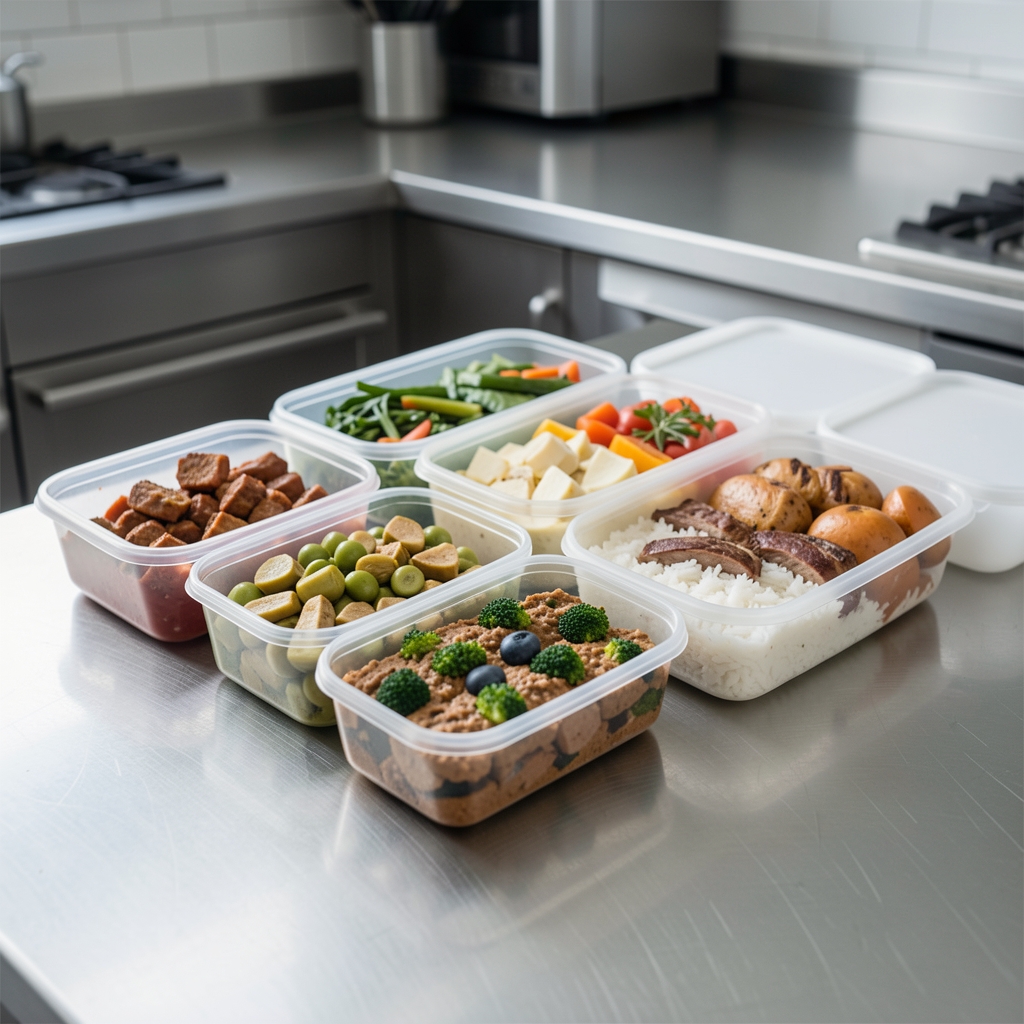
Preparing the Week's Meals Without a Fixed Script
Eleanor Ashcroft · 8 February 2026 · 9 min read

Brussels, 2026 — Field notes compiled over four months of observation. The men documented here share one characteristic: the first ninety minutes of the day are not improvised. Each action is sequenced. Each object placed the night before. The morning is not where the day begins — it is where it was already resolved.
The majority of rushed mornings are, on closer examination, the result of decisions deferred from the previous evening. The decision of what to wear, what to eat, whether to train. In each case where mornings were observed to run at an unhurried pace, the common element was not willpower or discipline in the morning itself — it was a structured close to the previous day.
This is not a novel observation. What the field notes added to this was specificity: the men who reported consistent morning routines spent, on average, twelve to eighteen minutes before bed setting out the following morning's physical environment. Running kit folded. Water glass filled. Notebook opened to the correct page. Coffee gear primed. The morning, in other words, is assembled in the preceding night.
The physical arrangement serves a cognitive function. When the first decisions of the day are already made — by the previous evening's self — the morning requires no early expenditure of attentional resources. The body follows the environment that was laid out.
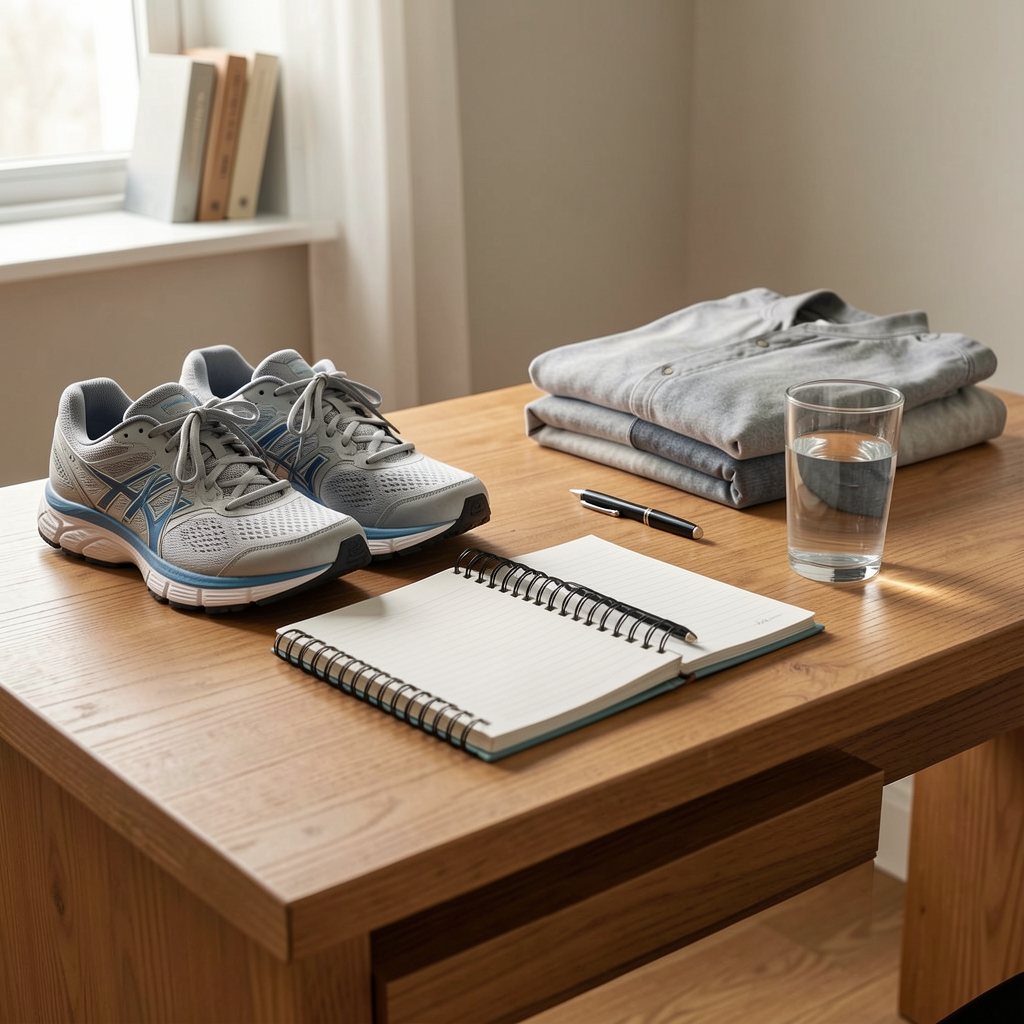
In every documented morning sequence, the first physical act was hydration. Not coffee. Not a phone. Water — typically 350 to 500 ml, consumed within the first ten minutes of waking, often before leaving the bedroom. The glass was set out the night before, as noted above.
The rationale, where subjects offered it, was functional: after six to eight hours without fluid intake, the body's cognitive performance on waking is measurably reduced. Re-establishing baseline hydration before any other task was described, variously, as "getting the machine running" and "clearing the overnight fog." Neither subject held a formal background in nutritional research, but both were describing the same documented pattern in accessible language.
What is notable is not the act itself — drinking water on waking is widely referenced in men's wellness writing — but the sequencing logic. Subjects had not encountered the same source material. They had independently arrived at the same early step through personal iteration. The convergence suggests the behaviour has practical utility that independent observation eventually surfaces.
"I don't decide anything before 07:30. By then, the walk is done, the water is finished, and the first hour of writing is already behind me."
— Subject B, Brussels, documented October 2025
Of the seven subjects documented across this field series, six incorporated some form of physical movement before beginning work or structured reading. The formats varied considerably: a 25-minute walk through the Cinquantenaire park; a 30-minute bodyweight strength circuit performed in a spare room; a 20-minute cycle loop along the canal before breakfast. The duration was consistent — none exceeded 40 minutes in the morning slot. The purpose, as described, was not to exhaust but to establish physical baseline and begin the day in a mode of activity rather than stasis.
The single subject who did not include morning movement noted the omission as a deliberate choice on recovery days — his training load was structured for four heavier sessions per week, with two active-recovery days and one full rest day. The morning on rest days involved extended reading and a longer grooming sequence instead, maintaining the ritual quality without the physical output.
This points to an important distinction in the field notes: the architecture of the morning is not defined by the specific activities within it, but by the fact that it is architecture at all. Predictable sequence creates the structure, not any single element of it.
Grooming occupied a consistent position in documented routines — always after movement, never before. The logic, expressed in different ways by multiple subjects, was that grooming marked the transition from the private, restorative morning phase into the public, productive one. It functioned as a signal: the day's preparation was complete.
The grooming sequences themselves ranged from four to fourteen minutes, with the median around eight. A face wash, a simple skincare sequence, a structured shave where shaving was part of the routine, and hair preparation. None of the subjects used an elaborate product array. Across documented sequences, the average was three to five products, each with a specific function and a habitual place in the sequence. The economy of the grooming routine — its briefness and its consistency — was part of what made it functional. A long, deliberated grooming session each morning would be a source of friction, not a transition marker.
Personal care routines of this type — brief, sequenced, consistent — reflect the same logic as the rest of the documented morning structure. They are not about the individual acts but about the reliable pattern those acts form together.
Breakfast in the documented sequences was notably consistent across subjects in one respect: it had been decided in advance. No one was opening the refrigerator and deliberating. Subjects either ate the same breakfast on most mornings (three subjects), or prepared a breakfast-specific element during their evening meal prep the previous night (two subjects), or had a defined rotation of two or three options based on training day versus rest day (two subjects).
Protein content was a deliberate consideration in every case, ranging from 25 to 40 grams at the morning meal. Sources varied — eggs, Greek yoghurt, cottage cheese, protein shakes as a supplement, sardines in two documented cases. The shared logic was that a protein-anchored morning meal reduced mid-morning energy variability and reduced the probability of compensatory eating later in the day. None of this was cited from published nutritional research; in each case it was described as a conclusion drawn from personal observation over time.
The briefness of documented breakfast preparation — typically five to ten minutes — was consistent with the broader pattern: all activities in the documented morning sequences were optimised for consistency, not elaboration. The morning is not where men in this series performed; it is where they prepared to perform.

Tobias Whitfield is a contributing editor at Talen Notebook, covering men's daily habits, morning protocols, and active lifestyle documentation. Based in Brussels since 2021, his field notes focus on the practical intersection of personal habits and everyday performance.
More from Tobias Whitfield →