
MORNING ROUTINE
The Architecture of a Considered Morning
Tobias Whitfield · 14 January 2026 · 10 min read
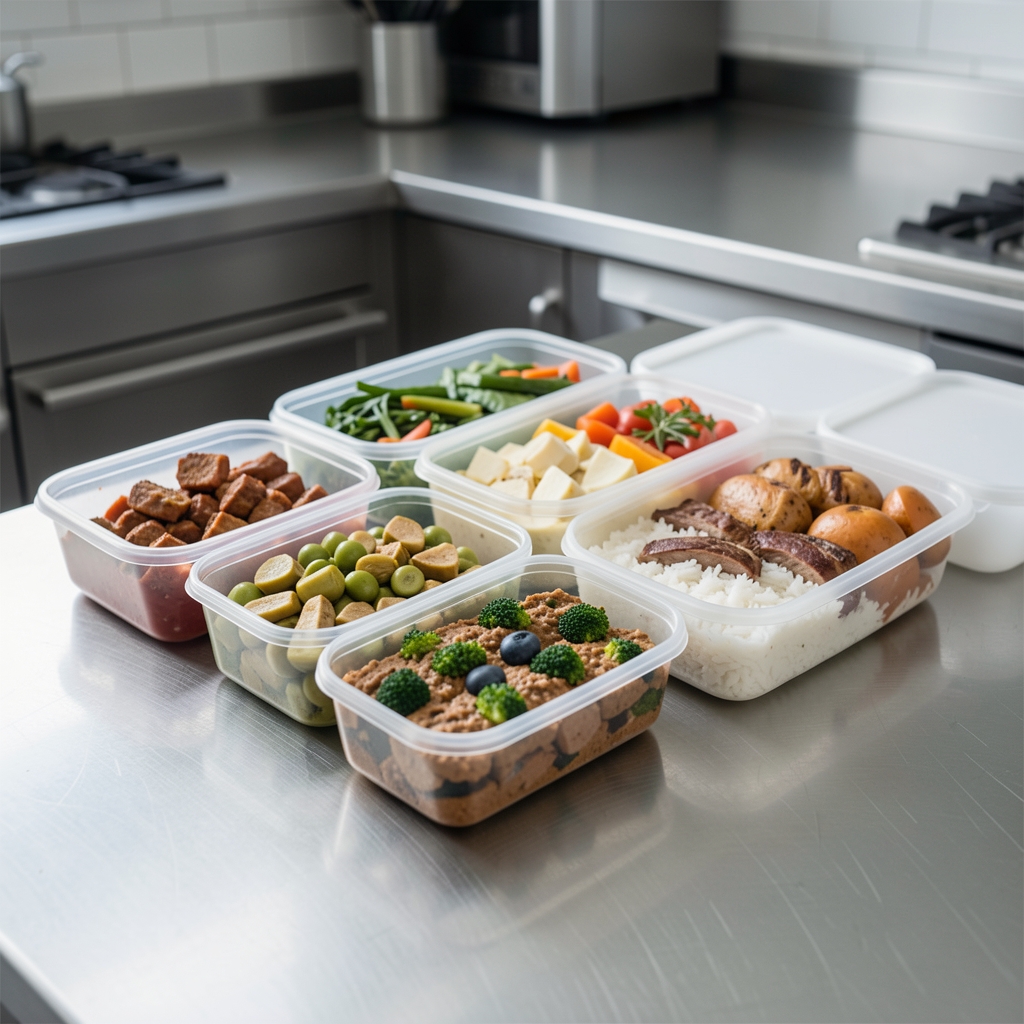
Brussels, February 2026 — The subject here is not a recipe collection. It is the structural habit behind meal preparation — the reason some men consistently eat well across a working week while others rely on convenience each evening. The difference is generally not access to better food or more time. It is a Sunday afternoon and a moderate degree of forward thinking.
Working backwards from the problem reveals its logic. When a man returns home at 19:30 on a Tuesday evening, moderately fatigued, with no prepared food in the refrigerator, the decision of what to eat must be made in a state of reduced motivation and elevated hunger. Under those conditions, the path of least resistance wins. That path is typically either a delivery order, a processed convenience item, or a poorly constructed meal assembled without nutritional consideration.
None of these outcomes are catastrophic in isolation. The problem is that the Tuesday evening improvisation repeats on Wednesday, Thursday, and Friday. By the end of the working week, a pattern has formed — not through intention but through the absence of one. Meal preparation is the intervention that disrupts this cycle before it begins.
The men documented in this field series had each arrived at some form of batch preparation independently, and each described the shift in similar terms: not as a dramatic overhaul of eating habits but as a removal of the daily decision point. When Tuesday's meal already exists in the refrigerator, the fatigued return from work no longer presents a nutritional problem.
The term "meal prep" carries connotations of elaborate systems, colour-coded containers, and elaborate spreadsheets. In documented practice, the habit was considerably more modest. The average preparation session among subjects ranged from 55 to 90 minutes, conducted once per week — typically Sunday afternoon, occasionally Saturday morning if Sunday was reserved for outdoor activity.
The typical session produced: a protein base (one or two sources, cooked in bulk — most commonly chicken thighs, eggs, or tinned fish), a cooked grain or starchy vegetable (rice, sweet potato, quinoa), a quantity of roasted or raw vegetables sufficient for three to four servings, and one or two sauces or dressings that would vary the flavour across multiple meals. Combined in different proportions and combinations throughout the week, these components produced varied, nutritionally coherent meals without requiring a full cooking session each evening.

Across documented meal preparation approaches, the single most consistent element was the deliberate prioritisation of protein. Not to the exclusion of other nutritional elements, but as the anchor around which other components were arranged. The rationale, expressed by subjects in various ways, was essentially: protein is the most effortful component to prepare adequately in a rushed weeknight context, therefore it is the component most worth preparing in advance.
Documented protein targets ranged from 140 to 180 grams per day across subjects, adjusted for body weight and training volume. Batch-prepared protein sources included: grilled chicken (most common), slow-cooked beef mince, a standing supply of tinned sardines and mackerel (requiring no preparation), hard-boiled eggs kept refrigerated, and Greek yoghurt as a fast-access supplement. The specific sources are less relevant than the principle: having a prepared, accessible protein source available at each meal removes the primary barrier to eating well under time pressure.
Subjects who tracked their eating in some form — whether through a dedicated application or a paper record — consistently noted that protein intake on days when prepared food was available significantly exceeded intake on days when it was not. This is consistent with the broader field observation: environment determines outcome, not intention.
"Ninety minutes on a Sunday prevents fifteen bad decisions across the week. That is the only equation that matters."
— Subject F, Brussels, documented January 2026
A recurring concern in discussions of meal preparation is the perceived monotony — eating the same food across five or six days. In documented practice, this concern was resolved through the component-based approach described above. When the prepared elements are sufficiently varied and combinable, the assembled meals are not identical. A batch of rice, roasted vegetables, and grilled chicken produces: a bowl with hot sauce on Monday, a wrap with avocado on Tuesday, a cold salad with olive oil and lemon on Wednesday. The components are constant; the assembly varies.
Several subjects supplemented their batch preparation with one or two fresh elements that required minimal preparation — salad leaves, fresh fruit, nuts — to maintain variety without extending the Sunday session. This hybrid approach — bulk-prepare the labour-intensive components, keep the easy components fresh — was described as the most sustainable long-term format.
The downstream effects of consistent meal preparation extended beyond nutrition in several documented cases. Multiple subjects noted that having prepared food available reduced decision fatigue across the working day — not just in the context of eating, but in the broader pattern of the afternoon. When lunch was already decided and accessible, the mid-day break could be spent on recovery or movement rather than deliberation and travel to a food outlet.
Two subjects specifically noted improved energy consistency through the afternoon following the introduction of a prepared lunch habit — attributing this to higher protein intake at mid-day and the removal of the glucose variability associated with convenience lunches. These observations are anecdotal and specific to the individual; they are recorded here as field notes, not as universal findings.
The broader pattern, however, is consistent: structured nutritional preparation functions in the same way as the morning routines documented in this series. The structure removes the friction that would otherwise produce inferior outcomes. The individual elements are unremarkable. Their combination, repeated across weeks, accumulates into a distinctly different nutritional profile from the improvised alternative.

Eleanor Ashcroft is a guest contributor to Talen Notebook with a focus on nutritional habits and food preparation practices within the context of active, working lifestyles. Her documentation work spans Brussels and Antwerp.
More from Talen Notebook →